Monday, June 8, 2009

the Wilds birding weekend wrap-up


This will be my last post (I think) about my weekend of Birding by Ear at the Wilds. I cannot say enough good things about this place. If you live in Ohio, or if you are ever passing through, please consider visiting the Wilds. You certainly will not regret it. The staff there are great and are passionate about the land and animals there. I guarantee you will learn a lot if you go.


A Carolina Wren built her nest in this little bucket that was inside the dining/meeting yurt at the education camp.

While 90% of the weekend was spent concentrating on birds, there were plenty of other things to see while we were there. All kinds of wildflowers abound (including invasive species like Autumn Olive, Multiflora Rose and Phragmites). I got photos of a handful of them.


Foxglove Beardtongue (Penstemon digitalis)


Umm... I'm afraid I don't know this one, but it certainly looks to be a member of the Pea family.


Birdsfoot Trefoil (Lotus corniculata)


Yellow Wood Sorrel (Oxalis stricta)


Yum... the wood sorrel leaves taste like Granny Smith apples!

Our trip leaders for the weekend, Jim McCormac and Al Parker, were absolute fountains of knowledge, not just about birds, but also in regards to just about any other natural thing we saw around us. Someone spotted this snapping turtle alongside the road, and the bus had to be stopped to it could be annoyed... um, investigated. That's Al holding the happy snapper.


During the last hour or so of our weekend at the Wilds, the birding kind of went downhill and it turned into a natural history free-for-all where we started looking at anything that moved. It was at this point that I realized how "good" Jim had been at containing himself during the rest of the weekend. You see, even though Jim's really good with the bird thing, he's really a botanist... who also happens to like dragonflies and butterflies and moths and frogs and... you get the picture. He's self-proclaimed ADD when he's outside, and jumps from one thing to the next rapidly. I'm not complaining, mind you... it's just hard to keep up sometimes!


unidentified captured frog


Okay, this is where things start getting really fuzzy for me. Birds and flowers I'm pretty good with, butterflies and other insects... not so much. I have some ID guides, but I'm only just getting into these things, so don't quote me on any of these IDs.


a skipper of some sort, maybe Silver-Spotted Skipper


Great Spangled Fritillary on clover (I'm pretty sure about this one)


? Perhaps a female Common Whitetail or female Twelve-Spotted Skimmer ? (why did I not take notes?!)


This is a Bluet of some sort, of that much I am sure. I remember the term Bluet being tossed about and I was confused, because I didn't see any Bluet flowers around. Then I realized it must be the damselfly on the leaf. This might be a Familiar Bluet.


I didn't have the lens I usually use for close-up work on my camera, so I had to make do with my longer zoom lens. This made getting the kind of close-ups I would prefer not really possible. But you get the idea.

And finally, I leave you with yours truly, pictured with "my" Grasshopper Sparrow.

Photo courtesy Jim McCormac

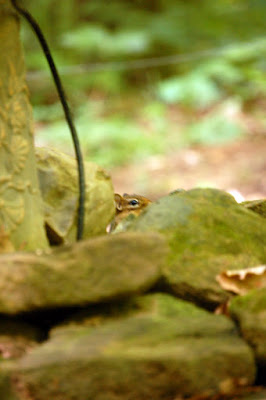
Hide and seek with a chipmunk

We have lots of great places in our "yard" for chipmunks to romp about and make their homes. One of those places is under the rocks that are at the base of our birdbath. Me and Chip played hide and seek this weekend!


Lady, I really don't think I like you being so close to me. Go 'way.


You can't possibly see me in between these rocks!


Oops! You're still there. I said Go 'Way!


Staking out the hidey-hole...


... and my patience pays off!


Not-so-secret tunnel... ENHANCE!

Friday, June 5, 2009

Ferny Friday

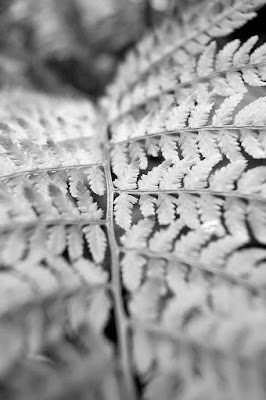
I have one more post in the works about my birding weekend at the Wilds, but I'm taking a break to share these fern photos with you. This is a cinnamon fern that I planted last year that has gotten HUGE - like, out of control huge. It's even overshadowing some neighboring ferns! Does anyone know if ferns can be divided like hostas or lilies? I don't think this can spend another year in its current spot at its current size because it's just gotten too big!

Anyway, without further ado, I give you the photos....


Wednesday, June 3, 2009

My guide to birding by ear

One thing I have heard many birders say over and over again is that they have a hard time with bird songs. I think the most common complaint is that it's hard to remember what song goes with with what bird. Never mind keeping all the little call notes straight (how can a "chip" sound possibly be made so many different ways?!) And songs of first year males versus more mature males? Forget about it!

I'm certainly no pro birder, and I've got a LOT to learn yet when it comes to bird song, but I feel pretty confident in my ability to ID quite a lot of birds just by ear, and I like to think I pick it up pretty fast. So I dedicate this post to all my fellow birders, pro and amateur alike, and give you my tips for birding by ear, based on my own personal experience. Here we go, in no particular order.


-Don't think of it as bird song - think of it as the voices of your friends.
As corny as it may sound, I do think of the birds as my friends, and I tend to greet them as I come across them in the yard and in the woods. I feel like when I hear the birds, I know just who among my friends is around at a given moment. This past weekend at the Wilds, trip leader Jim McCormac brought up a very good point that I have often thought of myself: Think of the birds songs the way you would your friend's and family's voices - how many people do you know just by the sound of their voice? You can know the birds the same way.

-Create whatever mnemonics you need to make a connection in your head.
Lots of folks hear the Carolina Wren saying "Teakettle, teakettle, teakettle", but sometimes that song sounds different to me, like "Cheater, cheater, cheater" or "Secret, secret, secret" (this morning it sounded like "Cheeseburger, cheeseburger, cheeseburger"!). The Acadian Flycather is typically coined as saying "Peet-ZA!", but it doesn't sound that way to me at all. To me it sounds more like an emphatic version of what the Pheoebe says - a very short, staccato version of "fe-BE!" Use whatever works for YOU to help you remember.

-Start small, start easy.
Start with what you know. I'm sure we all have backyard birds that we would know the sound of blindfolded. Start with those guys. Go beyond the basic "Teakettle, teakettle, teakettle" of the Carolina Wren, and start listening for other sounds they make. Like the sweet little "Cheer!" call, or their raucous scolding sounds, among others. This leads into my next point...

-Spend as much time with the birds as you can.
Whether it's in your own backyard, your favorite park, at the beach/ocean/lake, along a bike trail, in the meadow... Whatever habitat is most accessible for you, go there as much as you can and spend time with the birds. Watch them, listen to them. I am fortunate enough to live on a heavily wooded plot of land, so we get lots of woodland birds. Due to their constant presence I have been able to learn subtle nuances of birds like the Eastern Phoebe (song, chip, and a funny little trill call), the scolding calls of Tufted Titmouse, Carolina Chickadee, and Carolina Wren, and many variations of the Eastern Towhee's song ("Drink your teeeeea!", "tow-HEE," "che-WINK," and "WE-cher").

-Make a visual connection if you can.
I know this one can be difficult, especially with skulkers like Wood Thrush, Ovenbird, and countless warblers. However, seeing the bird sing can help make the link your mind that will cement the song and/or call in your brain for good. It's what helped me identify a string of "Cheer!" calls with the Carolina Wren, and the fantastically short little bubble-burst of song from the Henslow's Sparrow.

-Spend time with other birders.
Go on bird walks and bird field trips. I've never been on a bird walk that didn't address bird song. You'll be amazed at what you'll learn when you're among others who love birds just as much as you do. Everyone always wants to share anecdotes about their birds, and you just might pick up a vital clue to a mystery bird from a fellow birder!

-Try to learn at least one song on your own.
This is another powerful tool in birding by ear. The first song that I really learned on my own was that of the Wood Thrush. It was the second spring after I had really gotten into birding when I heard those ethereal flute-like notes and said "Holy cow, what is that?! I've got to find out!" It took several days of sifting through sound files on Cornell's site, but I finally stumbled across it. It was particularly tricky because I had no visual sighting of the bird, but also all the more rewarding. That was my "spark bird" of bird song, and since then I've made it a goal to learn more and more songs! (My thanks to Kelly for reminding me of this tip in relating how she learned the song of the Red-eyed Vireo!)

-Find auditory resources.
From BirdJam to the Cornell Lab's website to book/CD combos, there's lots of good auditory resources out there to help you learn bird songs. Use them often. You'll be delighted when you finally hear a song in the field that you remember from the CD you listened to last night.

-Don't try to learn all the birds at once.
I know there's a lot of birds singing out there all at once, and it can be a bit overwhelming. Like being in a room full of people, all the voices kind of blend into a dull roar. Instead of trying to know them all, pick one or two voices out of the crowd and concentrate on them. Some will be fairly easy and you'll be able to move on to someone new. Others will take more work. That's okay.

-Reinforce what you do know.
There's nothing wrong with calling out the bird's name when you hear it sing. That will only help you remember it better. I finally learned the Acadian Flycatcher's song at the Wilds, and now I can definitively say that we have those drab little birds in our woods. But since the song is still relatively new to me, I call out "Acadian Flycatcher" every time I hear it to help reinforce the connection (perhaps to my hubbie's dismay).

-Don't be afraid to be wrong.
Sometimes you may get a song or call note associated to a bird it doesn't belong to. There are so many birds that are described as sounding like a "Robin with a sore throat" that they are bound to get mixed up in your head, especially when you're first starting out. Don't worry if you get it wrong sometimes! I still have trouble distinguishing between a Flicker's "kek-kek-kek" call and that of a Pileated Woodpecker. Downy and Hairy Woodpeckers are very tricky for me, too. And this weekend at the Wilds I heard a deep "wheep" sound in the woods that I thought was the Great-crested Flycatcher, but sometimes it was actually Yellow-breasted Chat or White-eyed Vireo.

-Let go, and have fun.
While I think we would all like to improve our birding skills, whether it be visual ID or auditory ID (or nest ID, feather ID, etc.), sometimes you've just got to let all of that go and enjoy the birds for what they are, whether you know them or not. This will add greater depth and appreciation to a hobby that is already rewarding to you.


It's so hard for me to believe that I've gone through so many years of my life not REALLY hearing the birds and not REALLY seeing them until I suddenly opened my eyes and ears to them when I "got into" birding seriously 4 years ago. As I mentioned at the top of this post, there's still a lot for me to learn about birds and bird songs, but it's an education I look forward to continuing. I hope you found this to be helpful.

If any of you have any other birding by ear suggestions, or stories about how you've learned bird songs, I'd love to hear about them in the comments!

Tuesday, June 2, 2009

More birding at the Wilds

I took my camera along on this trip to the Wilds, hoping I might get a decent shot here and there of a bird, but of the 90 species that we saw and heard, I only got photos of a handful of them. I am getting better at accepting the limitations of having a lens that only goes to 200mm.

Here's a Great-crested Flycatcher that we saw at camp early Saturday morning.


We got some GREAT looks at this Prairie Warbler who planted himself in a couple of different Autumn Olives right alongside the road!


I think this dude was having a bad hair day. Look at the weird way his head feather are laying. He's almost got a mullet going!

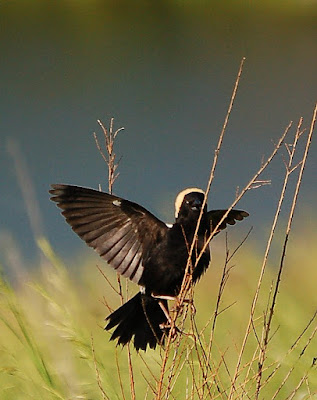
My best photos by far (with the exception of the sparrows in the hand) are those of the Eastern Bobolink. The field where we stopped to observe them was absolutely rife with them! The males were really pulling out all the stops to get the attention of the ladies. I was really excited to see and hear the Bobos, and to add this strange-looking bird to my life list.


A female Bobo, trying to decide on one suitor among many.


"Hey laaaaadies!" he's saying. Wow, for the longest time I've been trying to think of what famous person these birds remind me of with their clownish yellow cap, and it just came to me: Dennis Rodman.

Not exactly a compliment to the Bobo, but I see what I see...
And what is it with me and talking about the birds' "hair"?!


Check out those fantastic markings and colorings! If I was a girl Bobo, I think I might be impressed.


Either off to try his luck with a gal, or to go clobber on another male who's trying to take away his gal.


Here's a run-down of some other cool things we saw and heard:
  • Great look at an Eastern Kingbird flycatching.
  • Chimney Swift aerial mating display.
  • American Woodcock mating display flight heard (some of the participants witnessed on Saturday night, but I was in bed by then).
  • Awesome views of the Yellow-breasted Chat and Kentucky Warbler (usually very elusive).
  • Sighting of a wild Bobcat on the Wilds property (this is NOT a species they manage, it was a wild Bobcat).
  • Pair of Kestrels near a nest box, the female with a rodent in her talons to feed to the young.
  • Great views of Cerulean Warbler and Northern Parula Warbler.
  • Mama Wood Duck and 7 of her babies on one of the many lakes at the Wilds.
  • An insane replication of Barred Owl and Eastern Screech Owl songs by one of our trip leaders, Al Parker. The Screech Owl songs actually brought the real deal in right above our heads!

And here is a list of all the birds that I added to my life list over the weekend (for some reason I failed to do the Life Bird Boogie for any of them):
  1. Swamp Sparrow
  2. Warbling Vireo
  3. Acadian Flycatcher
  4. Eastern Bobolink
  5. Grasshopper Sparrow
  6. Henslow's Sparrow
  7. Savannah Sparrow
  8. Eastern Meadowlark
  9. Green Heron
  10. Orchard Oriole
  11. Rough-winged Swallow
  12. American Kestrel
  13. Horned Lark
  14. Kentucky Warbler
  15. Louisiana Waterthrush
  16. Yellow-throated Vireo
That's it for the birds, but I captured photos of some other things during the weekend. To be continued...

Monday, June 1, 2009

Sparrows in the hand

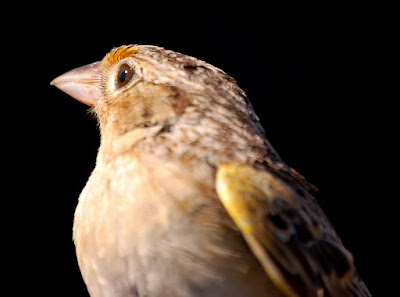
We birded in quite a few habitats during the Birding by Ear weekend at the Wilds, and one of those habitats was grassy fields, home to Bobolinks, Meadlowlarks, Horned Larks (all life birds for me!), and lots of sparrows. There was a gentleman by the name of Danny Ingold there on Saturday morning (Jim, can you help me with his name? I forgot to write it down in my notes!) who had some mist nets set up and he caught several sparrows that we got to examine (and photograph) up close. And - BONUS - I got to hold one of said birds! A life experience for sure! I don't have any photos of me holding my Grasshopper Sparrow (life experience + life bird!), but if I get some, I'll post them here. For now, here are some of the birds that other folks had in-hand:

Grasshopper Sparrow, the first of 2 that were caught (I held the 2nd one).


One of the distinguishing characteristics for ID-ing this bird by sight is its clear breast. The shape of the head is also a bit unique, as it's kind of flattened out on top (best seen in the top photo), like someone laid a big book on top of his head.


This is Jean, one of the camp participants, holding the Grasshopper Sparrow.


These birds surely had to put up with a lot of cameras. On the left is Jim McCormac, and on the right is Jean's husband. In the sunglasses is the gentleman who did all the bird catching.


The Field Sparrow was our next bird in the hand. We had several descriptions going around for his song: ball bearing, bouncing penny, bouncing ping-pong ball, and a fourth I can't remember.


Unfortunately I didn't get very many pictures of this little cutie (the only sparrow with an entirely pink bill).


Our final bird in the hand was the Savannah Sparrow (lifer).


Here you can see the streaking on the breast, as opposed to the clear breast of the Grasshopper Sparrow.


Like I said, lots of cameras on these little birds. They were amazingly calm given that we invaded their space so badly.


This Savannah Sparrow had been previously banded.


So very handsome.


I love this shot for the sharp focus on the face. That yellow eyebrow stripe is another good identifying field mark.

We got some great looks at a Henslow's Sparrow (lifer) on Sunday morning, but only by scope, so I wasn't able to get any photos of him. He was sitting on top of some Teasel, singing his little heart out. Watching him sing was something else, because the Henslow's really throws his head back to sing, but the song is really short, so he looks like he's sneezing or coughing. Since I was doing my fair share of sneezing and couging throughout the weekend, I felt he was a bird I could really identify with.

I'll have pictures of some more birds tomorrow!