Showing posts with label citizen science. Show all posts

Monday, November 14, 2011

May the counting begin!

Project FeederWatch got underway this past weekend. This will be my 7th season counting for this citizen science project run by the Cornell Lab of Ornithology, and I can't wait to see what kind of new and interesting things I'll see at my feeders this winter, whether it be a new species, a record-breaking flock of Grackles, or a never before seen behavior or interaction among the birds.

Already I have some interesting data to look at from my first counting session. Looks like things are getting off to a start that is practically identical to last season. The exact same species showed up, with only the tiniest variation in the numbers of each. How about that?

species wknd of 11.13.10 wknd of 11.12.11
Mourning Dove 13 13
Red-bellied Woodpecker 1 1
Downy Woodpecker 2 2
Hairy Woodpecker 1 2
Carolina Chickadee 4 5
Tufted Titmouse 3 2
White-breasted Nuthatch 3 4
Northern Cardinal 2 2
American Goldfinch 9 10
Total individuals 38 41

Looking back on past seasons' data, I should expect to see some Juncos next weekend. I have seen a few in town already, but none yet in our own yard.

I can tell that my fascination with goldfinches and their striking plumage is going to continue.

Here we got a nice look at their white patches above the tail, not feathers you see terribly often

And the nuthatches will continue with their bold antics, running each other off from the feeders. I hope to catch some good shots of them with their various displays of aggression, but they are fast and hard to keep up with the camera. Unless they're eating, that is.

One new bird that I hope to draw in this year is the Brown Creeper. They are definitely in our woods, but they're not exactly a bird that takes to traditional bird feeders. I'm going to try some homemade "bark butter" to see if that will bring them in.

And, it will be time to start making homemade bird dough soon, once the temps actually decide to get cold (as I write this at 8:30 in the evening, it's still 69 degrees outside... I'm not complaining, but it is a bit odd for mid-November!). Will my Pileated Woodpecker come back again this year for a sample of that tasty treat? I surely hope so!

Sunday, August 7, 2011

Late summer thoughts on birding

I've never tried "hot" yoga (yoga practiced in a room heated to 90-105 degrees at 40% humidity, for 90 minutes), but I have to wonder if "hot" birding might catch on (birding practiced outdoors at temperatures between 90 and 100+ degrees at 70-85% humidity)? I mean, they both involve sweating, potential for passing out if you're not careful, and could lead toward the path of enlightenment if you let them. Birding's a little more passive than yoga, though, with the most taxing position of birding being the constant looking up - which leads, more often than not, to knotted muscles of the trapezius, as opposed to the stretched and relaxed muscles achieved with yoga.

Southeast Ohio, like much of the eastern half of the country, has been very sauna-like over the past month or so, and rolling heat advisories or warnings have been issued off and on throughout that time frame. Folks who work and play outside have been advised to take it easy, to seek shade often, and to drink plenty of fluids. We humans can do a number of things to thermoregulate when it gets hot outside: use fans or air conditioning, wear less clothing, go for a swim or mist ourselves with water, sip cold drinks, eat ice cream, etc. Oh, and we sweat. This is something our bodies do naturally to help us cool off. What are all those birds doing to stay cool? Birds don't sweat, but they do pant. If you see a bird standing around with its beak agape on a hot summer day, it's probably panting. They have other ways to move heat away from their bodies, too. Since there's no feathers on their legs and feet, excess heat can escape from there. They can also hold their wings away from their body and ruffle their feathers, which encourages heat to move away from their skin and body. They can also drink, bathe, and stay in the shade to keep cool. And maybe they even subscribe to one of our human mottos when it gets too hot: "Don't move, unless you have to." Unfortunately, the birds' survival depends on eating pretty frequently throughout the day, and they have to work waaaaay harder for their food than most of us do, so staying idle isn't really to much of an option for them.

Given that it has been so hot lately, it does beg the question of "why bother going outside, especially to WATCH BIRDS?!" Well, if I wasn't surveying for the OBBA II (Ohio Breeding Bird Atlas), I just might not be out there. But then I would be missing the opportunity to see new things and new places, and it would interfere with my continuous desire to study and observe birds. I will admit, however, to calling myself crazy at least once recently while standing out in the baking sun, waiting for a bird to reveal itself. I stayed in one spot for a good 10 minutes trying to ID a flycatcher that was carrying food (Willow Flycatcher), and also trying to get good looks at another bird that was skulking around in some scrubby brush, and who turned out to have a fledgling in tow (Orchard Oriole). Sweat was dripping down my back, the sun was blazing down, and I really questioned my sanity. If I weren't collecting this data for science, there is no way I would have waited these birds out just for an ID.

Back in early June, when it was decidedly more comfortable outside and the birds were much more active (establishing and defending territories, building nests, making babies and feeding babies), I was on a roll and I was able to find breeding evidence in spades. I was actively birding most evenings and a lot on the weekends, too. I was riding high on all that I was learning and experiencing for the first time. Then I had to put the brakes on birding for a number of weeks because projects around the house needed to get done, and, for whatever reason, the projects weren't going to finish themselves (that's inanimate objects for you!). Luckily I was able to squeeze in some reading during that time, and of course my reading topic of choice was: birding. I finally read Life List: A Woman's Quest for the Most Amazing Birds.
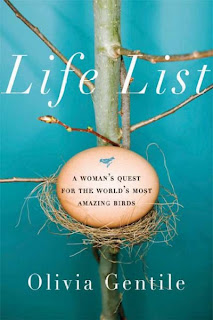


For those not familiar, it is the story of Phoebe Snetsinger, the person who held the world record (according to American Birding Association criteria) for the most species of birds seen by one person, as of her death in 1999 during a birding expedition in Madagascar (her record has since been broken). While reading Snetsinger's story, I couldn't help but feel a kinship with certain aspects of her passion. She started birding relatively late in life (i.e. it wasn't a hobby she took up as a child), she made it a point to study her birds before she went on any bird-seeking excursion, and she was committed to her hobby. The statements above also apply to my birding experience thus far. Unfortunately, what started out as a hobby for Phoebe eventually turned into an obsession that caused a division between herself and her husband and 4 children. I plan to keep my own birding slow and easy, with bits of excitement here and there. Surveying for OBBA has been one such tidbit of excitement for me.

Participating in OBBA appeals to me on many different levels, and opens a window onto what some of my personality is like. I like keeping lists, keeping track of things and working with numbers, and I especially like watching lists of things that I am keeping track of grow and grow, so this is right up my alley. Even though I am just counting things that are in front of me, it somehow gives me a sense of accomplishment. (Participating in Project Feederwatch in the winter feeds this same sense of accomplishment.) I've even managed to turn it into a game of sorts where I am the sole player and I'm in competition with myself. In this game, I pride myself in the fact that I took the numbers of observed species in "my" 2 OBBA blocks from less than 15 up to figures between 60 and 70 species. It also feels good to have built these numbers up over the course of only a few weeks (with a few incidental records from previous years added in). The flip side of this, however, is that when I work on other blocks, where I have spent much less time and am much less familiar with the territory, I somehow feel bad if I don't come up with what I would consider a "respectable" number during my observation period. I can't give myself a "win," even though I did my best with the time I had. This is what happens with a personality that is always working to best itself.

Surveying for OBBA also feeds my sense of adventure. I enjoy using maps to find my way, and going to new places, and I've now gone to some regions of the state that, while pretty close to home, are not areas that I've had occasion to visit and were thus previously unknown to me. While it's a little frustrating to bird in new places (because I don't know where the "hot spots" are), it doesn't take too long to figure out where the promising strongholds are. Once again, though, there is a flip side to the adventuring element, and it is the benefit of being intimately familiar with an area. My road, my neighborhood, the woods, creeks, streams, wetlands, farms and cemeteries in the two blocks that I "own" have been etched into the map of my mind over the years that I have lived here, and having first-hand knowledge of the available habitats to survey has proved invaluable (and had a direct impact on my ability to observe such large numbers of species).

The current breeding bird atlas is in its sixth and final year, which means I came into the game late, and missed a lot of "good" species as a result because I wasn't able to get out there to enough places during prime time (April-June). I feel bad about this, even though I know I shouldn't. As I mentioned earlier, I did what I could in the time that I had available, and that's all one can ask. Now that we are into August, some birds are already starting their migration south, and breeding is more difficult to confirm. The fecundity of spring, that rush of everyone coming in to set up camp and start a family - that's all gone until next year. Late summer birding is harder, that's for sure: many birds are singing less, they're harder to see, and they aren't as active in the heat. As much as I hate to say it, birding at this time of year is kind of a downer and slightly less rewarding. But there's always SOMETHING to see. Late in July I found Eastern Bluebirds still using next boxes, and I saw several Red-tail Hawks who were requesting food from parents, even though they looked like they were probably old enough to start hunting on their own. I also saw a Tufted Titmouse struggling with a very large caterpillar, and getting a very satisfying meal from it. I keep telling myself that even though it seems like things are slow and languid among the birds right now, it's always worth it to take a good look around. There's bound to be something good going on out there.

Sunday, June 19, 2011

Serious birding business

Coming into this year, I already knew that 2011 would be a big birding year for me. It started off with a bang when I participated in my first-ever Christmas Bird Count up in the Hocking Hills on January 2nd. Then I had a number of speaking engagements where I talked about birds and birding. Then, of course, there was the New River Birding and Nature Festival in West Virginia during the first week of May. That event, in and of itself, served to catapult my birding knowledge and confidence into a dimension previously unknown to me.

The confidence I gained led me to finally offer my time and effort to a cause that is in need of my help (and yours, too, if you're an Ohio birder!). A little over a week ago I signed up to take part in Ohio's 2nd Breeding Bird Atlas. The first atlas was completed 20+ years ago, and it is strictly a volunteer effort. It's citizen science at its finest, in my opinion, and every bit of input helps. Here is a brief synopsis of the atlas, as stated on the OBBA II website:
The second breeding bird atlas for Ohio is generating extensive information that will be essential for the effective conservation and management of birds. By engaging Ohio's citizens in this cooperative effort OBBA II will foster interaction among bird enthusiasts of all experience levels and will heighten public awareness of birds in Ohio.
The atlas works somewhat like a Christmas Bird Count in that volunteers are counting birds within a pre-defined area (a "block" that is approximately 10 miles square), but information is tallied from the entire state over a period of 5-6 years. Also, it's not simply a matter of counting birds, but looking for specific cues that breeding is occurring or has occurred. With a little over 4,400 blocks to be surveyed across the entire state, even just a few hours of surveying can help out with this monumental undertaking. Unfortunately (and understandably), there are still a number of blocks throughout the state that have not been surveyed, and have no data. The two blocks that I recently claimed ownership of had some small numbers up until now, but I am working to quickly change that.

By claiming ownership of a block, I have committed myself to spending 25 hours (per block) of time out in the field looking for breeding evidence, as well as documenting 75% of the expected total species for each block (and confirming breeding for as many of those species as possible). Sounds like a lot of work, and I will admit that it's a bit daunting, but I've been very encouraged by each trip afield so far. I feel like I still have a good bit of ground to cover, but each time I've gone out I've either added a handful (or two!) of new species to the block, or upgraded previous observations from a "possible" or "probable" status to "confirmed." Granted, the more time I spend out there, the less new data I will have to report, but for now I'm riding high on all the wonderful new things I'm seeing.

Even if you've never done any surveying for breeding birds like this before, there's still time if you're interested. June and July is prime time, and there's lots of activity out there right now. Any of my Ohio readers, if you're not already involved but would like to be, please go to the OBBA II website by clicking HERE. You'll find all the information you need to get started. Not an Ohio resident? Other neighboring states are doing breeding bird atlases as well, and West Virginia is in the middle of their 2nd atlas project. Click HERE for links to BBA projects in other states (and Canada).

In my next post I'll detail some of the wonderful things I have had the opportunity to observe just within the last 10 days as a result of being part of this effort.

Monday, November 15, 2010

The season of counting has begun!

When I was a young'un, one of my favorite things to do this time of year was leaf through the Service Merchandise catalog (and maybe the JCPenny catalog, too) and look at all the toys that I could ask Santa to bring me for Christmas. I could easily spend hours looking at the same pages over and over, memorizing all the Barbie cars and houses, and cataloging all of the Star Wars action figures that I hadn't collected yet.

Once Christmas was over, though, that was it. I had some new toys to play with, but winter would drag on without much new to look at, and those toy catalogs were gone from my mind by December 26th.

Now, as a grown-up kid, I have a hobby that takes the place of poring over those pages and pages of toys. And it lasts way beyond the holiday season - in fact, it lasts almost until spring! I'm talking about Project FeederWatch, the Cornell Lab or Ornithology citizen science project that got me hooked on birding. This winter marks my 6th season of watching and counting birds and reporting my findings to the Lab. It's so much fun, and it really gives me something to look forward to in the winter. I'm quite prone to the winter "blahs," so having this incentive to look out the window and interact with the natural world is really a wonderful thing.


FeederWatching can be addictive, and may cause you to spend hours watching your feeders. If you're not careful, you might burn a dinner or two because you're otherwise occupied watching the fighting going on between the Pine Siskins and American Goldfinches on the thistle feeder. (Not that I would know anything about birds distracting me from cooking!)


A rare moment when Pine Siskins and American Goldfinches are eating quietly side by side. How many of each bird can you find in this picture?

FeederWatching is easy. Just pick 2 consecutive days out of the week that are convenient for you, and count for as long as you are able. Wait at least 5 days, and then count again for 2 more consecutive days. Lather, rinse and repeat from now until April 8, 2011, reporting your observations to Cornell along the way. My counting schedule is always a 1-2 punch of Saturday and Sunday, simply because those are the 2 days per week when I can spend the greatest number of daylight hours watching my feeders.


This winter I expect to see old friends for sure, and hopefully a few new ones, too. All of our 3 common woodpecker species (Downy, Hairy and Red-bellied) were accounted for this past weekend, and the two common "flocking" species at our feeders (Mourning Dove and American Goldfinch) came out with relatively strong numbers.

The Winter Finch Forecast by Ron Pittaway (hosted on eBird) has given me some idea of specific finch species to look for. One species I could expect to see this winter that I haven't seen before is the Common Redpoll. This would not only be a new feeder bird, but a life bird, as well. According to Pittaway's article, Common Redpolls could "irrupt" (defined as: to increase rapidly and irregularly in number) into the northern U.S. this year for 2 reasons: their food source in northern Canada is scarce this year, and it was an exceptionally good breeding year for the species, with double- and triple-broods reported in parts of Canada, so competition for food will be even greater than usual. I'll be keeping my eyes peeled for this species! BULLETIN: I was just alerted to a map on RareBird.org that is tracking the movements of certain species, such as the Common Redpoll, into Ohio for the 2010-2011 winter season, and they have already been spotted in some of the northern-most counties. (Thanks for the tip, Jim!)

Another finch species of interest is the Purple Finch, which is also expected to be plentiful in the northern U.S. this winter, again because their major food source up north is not in great supply. I don't usually see them until late December or January, if they show up at my feeders at all, but I spotted a male Purple Finch dining on sunflower seeds at my feeder a little over a week ago, which is super early for me. I hope he comes back soon so I can count him for FeederWatch.


I am now confident that I will be seeing Pine Siskins at the feeders this winter.  My first encounter with this species was during the 2008-2009 FeederWatch season, but they were not present during last season's count. Even though Pittaway's article doesn't predict them coming down into the northern U.S. (food sources up north are excellent), I have heard "chatter" suggesting that they are already working their way into Ohio for the season. The above-mentioned map on RareBird.org shows that they are already farther south by this point in November than they were for the entire season in 2009-2010. Apparently they have been spotted in Athens county already.  So riddle me this:  If their food source is abundant up in Canada, what could possibly make them want to come down this way for the winter?  Hmmmmm...


"Hey, Heather says she's got plenty of thistle and black-oil sunflower seeds at her place! Maybe we should go see her!"


"What's that, you say? Party at Heather's? Well, I'll get my sassy little self right on over there!"


So if you are looking for something cool and fun to do this winter, something that will engage you with life right outside your door, consider counting birds and contributing valuable data as a citizen scientist.


This Tufted Titmouse says, "We will stand and be counted!"


Join Project FeederWatch today!

Tuesday, January 12, 2010

Feederwatch, week 9

Okay, everyone say it with me: "Brrrrrrr!" Wow, was it cold this weekend! It got down as low as 1°F right around 8am on Sunday, with a high of 30° sometime Sunday afternoon. We also had about 5" of snow on the ground.

We got a couple of new species at the feeders this weekend, presumably as a result of the snow cover and cold temps. The American Tree Sparrow made its debut showing for this season, and my beloved Eastern Towhee finally made an appearance. Since my first sighting of the Towhee on Sunday I've been seeing them around the neighborhood more frequently. Hooray!

Got lots of photos of various birds eating homemade suet dough this weekend, more of which I'll share in a future post. The Titmice love the stuff, but not all of them were as piggy as this one!


This picture cracks me up - it's as if the Titmouse is claiming the dish and its contents as HIS!


Blue Jay showing me the best view I'm gonna get

My feeder watching will be reduced by a day this coming weekend due to the fact that we'll be spending our daylight hours at the Wilds on Saturday for the Wilds Winter Extravaganza (sponsored by the Ohio Ornithological Society). I look forward to spending time with fellow Ohio birders and hope to add some new birds to the life list (keeping my fingers crossed for a Golden Eagle or a Horned Lark - or both!). And I hope that going some place different will get me out of the funk that has got me down after all of these cold, grey days, despite my best efforts to keep the funk at bay.


Birdy roll call for weekend of 1/9/10-1/19/10
Mourning Dove31
Red-bellied Woodpecker1
Downy Woodpecker2
Blue Jay2
Carolina/Black-capped Chickadee5
Tufted Titmouse5
White-breasted Nuthatch2
Carolina Wren2
Eastern Towhee1
American Tree Sparrow2
Song Sparrow4
White-throated Sparrow4
Dark-eyed Junco4
Northern Cardinal5
American Goldfinch11

Happy birding!

Sunday, January 3, 2010

Feederwatch, week 8

This first weekend of 2010 was a blustery one! The high temperature was 22 degrees, and we had a low of 9 degrees, but a constant light breeze made for an even cooler windchill factor. A light dusting of snow covers the ground, making it easy to see where little birdy feet have hopped about.


It was a good weekend for aiming the camera at my fine-feathered feeder friends from the comfort and warmth of indoors. I got quite a few "take away" shots, like these.


White-breasted Nuthatch and Red-bellied Woodpecker fly off with their respective treats. Once again, you can actually see that red belly.

And the beautiful Northern Cardinal looked especially brilliant.


Kelly, this one's for you!

A very special treat was an extended visit from a sweet Carolina Wren, but I'm saving those photos for another post.

Someone recently asked me if we had noticed an increase in Titmice at the feeders this season, to which I replied "no." Well, I went back and checked data from all seasons to-date, and it turns out that so far this season has seen the greatest average number of Titmice: 4.5. My first season of Feederwatching ('05-'06) saw the lowest average number of Titmice, at 2.4, and last season was the 2nd lowest average with 2.9. Hmmm... last season saw a poor showing for Carolina Wrens, too. I think I need to figure out how to get my data into some kind of chart form for easier analysis, which might help me get a better picture of what happened last winter that made it so difficult for the birds. Now that I think about it, though, the winter may not have had so much to do with at as the summer - maybe last summer was a bad/unsuccessful mating season for some reason.

Anyway, to this weekend's numbers...

Week 8 roll call, 1/2/10-1/3/10:
Mourning Dove25
Red-bellied Woodpecker1
Downy Woodpecker1
Hairy Woodpecker1
Blue Jay1
Carolina/Black-capped Chickadee4
Tufted Titmouse5
White-breasted Nuthatch2
Carolina Wren2
Song Sparrow2
White-throated Sparrow3
Dark-eyed Junco3
Northern Cardinal5
American Goldfinch7

Happy birding!

Monday, December 28, 2009

Feederwatch, week 7

Wow, I can't believe it's the 7th week of Feederwatch already! Unfortunately there are no photos to accompany this week's installment. I didn't spend as much time feeder watching as I normally do, but I did observe a few interesting things when I was paying attention.

There's still that perky Golden-crowned Kinglet hanging around our property. One of those birds that is heard more often than seen, it was good to lock onto it with the binoculars. Unfortunately, though, I am unable to include it in my Feederwatch count because it doesn't come to the feeders. I wonder, though, if they would come in if I put out waxworms? I need to start putting those out again. I never actually saw any birds partake of the waxworms last year, so I kind of forgot about them.

Another item of interest was watching a male Red-bellied Woodpecker cache peanuts. Whenever a bird, whether it be titmouse, nuthatch, or woodpecker, flies away with a whole peanut in its beak, I usually lose track of it after a few seconds. I was able to stay with the Red-bellied, though, as he flew to a distant snag. I watched him plunk the peaut into a crevice in the dead tree and smash at it with his dagger-like beak, and then he consumed a few pieces of the nut meat within. The remaining pieces of nut meat were distributed to other trees in the immediate vicinity of the snag. He very carefully, but forcefully, stashed the nut meat into these trees. The angle at which he was perched did not allow me to see if the nuts were going into an existing hole, or if he was somehow tucking them into crevices in the bark. I even wondered if he was perhaps making new holes for the nuts? Later in the day I even watched him move a piece of nut meat from one tree to the other. Very interesting, indeed.

Finally a comment on the count trend for White-breasted Nuthatches. I counted 4 this weekend. That doesn't happen very often. In fact, it's only happened once each season since I started counting for Feederwatch, and it didn't happen at all last season. The numbers were pretty low for WBNUs last season, never going above 2 per count, while they were much more variable in other seasons (ranging from 1 to 3, and sometimes 4). I have steadily observed 2 WBNUs every weekend so far this season, until I spotted 4 this weekend. What does this mean, if anything? I don't know. I do know we lost 1 WBNU to a window collision just before the count season started, so I'm actually glad to know that there are at least 4 of these squawky, horn-honk-sounding birds still in our woods.


Feeder round-up for December 26-27, 2009
Mourning Dove15
Red-bellied Woodpecker1
Downy Woodpecker2
Carolina/Black-capped Chickadee4
Tufted Titmouse4
White-breasted Nuthatch4
Carolina Wren1
Dark-eyed Junco1
Northern Cardinal3
American Goldfinch7

Happy birding!

Sunday, December 20, 2009

FeederWatch, week 6

We had a very snowy weekend for this FeederWatch session! We only got a couple of inches, but the white stuff came down all day Saturday. Added one new species to the roll call this week: Song Sparrow. I had heard them calling earlier in the week, and was happy to see them ground feeding with the Juncos, White-Throated Sparrows and Carolina Wrens this weekend. Having snow on the ground sure makes all of the ground feeders much easier to spot!


Carolina Wren was very hard at work at the suet feeders this weekend in addition to ground feeding.


Proof that Red-bellied Woodpeckers really DO have red bellies!

This weekend I counted the highest number of Mourning Doves that I've ever seen at once in all the years I've been doing FeederWatch: 38. They really seem to like roosting high up in our trees, and also down in some of the brush piles that have accumulated in the past few years.


How many do you see? (click to enlarge)

And of course, no FeederWatch session would be complete without a squirrel sighting:


Roll call for FeederWatch, week 6 (12/19-12/20)
Mourning Dove38
Red-bellied Woodpecker1
Downy Woodpecker3
Hairy Woodpecker1
Carolina/Black-capped Chickadee4
Tufted Titmouse5
White-breasted Nuthatch2
Carolina Wren2
Song Sparrow2
White-throated Sparrow2
Dark-eyed Junco2
Northern Cardinal5
American Goldfinch8

Monday, December 14, 2009

Feederwatch, week 5


Between some rainy weather and being committed to various other activities (shopping, doing up the holiday cards, etc.), I can't say that I have much exciting news to relate about this past weekend's FeederWatch session. Bird traffic remained pretty steady.

I did see one thing that struck me as odd, though. This Carolina Wren was hopping around on the deck early Saturday morning, but it was hopping in a strange way. It almost looked as if it had no legs. It looked like it was hopping about on its tummy. I even saw it fidget sideways a bit to fluff out some feathers, and still saw no legs. This is not possible, is it? For a bird to have no legs and survive? I'm sure there must be an explanation for what I saw, one that involves the bird still having its legs. Unfortunately I was only able to get one photo of the bird "sitting" on the deck. It eventually hopped away, once again seemingly on it's stomach, to a spot where I was no longer able to see it. Later in the day I saw a Carolina Wren hanging on the suet feeder, in a perfectly normal fashion with perfectly normal-looking feet and legs.


Here I cropped in on the bird a bit more. It was only 12 degrees outside, so maybe it just had its feathers super fluffed out to keep warm. I don't know, though. Something was fishy about that bird. I will be keeping my eye out for future glimpses of such strange happenings.


We had some pretty steady rain Sunday morning. The squirrels got quite wet. I felt bad for them.


Feederwatch tally of highest number of individuals counted from 12/12-12/13:
Mourning Dove14
Red-bellied Woodpecker1
Downy Woodpecker1
Hairy Woodpecker1
Carolina/Black-capped Chickadee5
Tufted Titmouse4
White-breasted Nuthatch2
Carolina Wren1
White-throated Sparrow1
Dark-eyed Junco1
Northern Cardinal5
American Goldfinch6

As always, happy birding!

Monday, December 7, 2009

Feederwatch, week 4 (including video)

The big news for this week's session of Feederwatching is that we got snow!! Accumulation was less than an inch, but it snowed for about 4 hours and most everything got nice and white. It was a chilly weekend overall, and the temps didn't even get above freezing on Saturday.

Given those conditions, I would have expected a lot more birds at the feeders, but things were pretty much the same as they have been during previous weeks. In past seasons when the snow would start to fly, the birds would usually "freak out," as I call it, and would just mob the feeders as if were going to be their last meal. Needless to say, they were much more calm this weekend than I expected them to be.

I was amazed to still be hearing Yellow-crowned Kinglets bubbling around in the trees in this cold weather. Unfortunately they don't come into the feeders, so I'm not able to count them.

I am still impatiently waiting to see Eastern Towhees and Blue Jays. I have not heard so much as a peep from either species anywhere in the neighborhood for months. I heard them around in late summer, but it's not like these are birds that migrate south for the winter. Where the heck did they go?! I guess I just need to stop being so impatient. After looking at data from last season, neither of these birds showed up regularly at the feeders until January.

The tally for my 4th set of observations (12/5/09-12/6/09):
Mourning Dove16
Red-bellied Woodpecker2
Downy Woodpecker1
Hairy Woodpecker2
Carolina/Black-capped Chickadee4
Tufted Titmouse4
White-breasted Nuthatch2
Carolina Wren1
White-throated Sparrow1
Dark-eyed Junco1
Northern Cardinal8
American Goldfinch9

And here's a video of several different birds visiting the peanut feeder (taken with my new Nikon Coolpix camera). Happy birding!

Monday, November 30, 2009

FeederWatch, week 3

This past weekend we had another blast of ridiculously, unseasonably warm weather, with temperatures in the mid-60's on Sunday, floated in on a stream of warm breezes coming out of the south. But oh what a difference a day makes! Today we had a stiff breeze cold enough to make my nose run, and I write this next to the first blaze of the month in the ol' wood stove.

But enough about the weather. What about the birds? Well, surely the two things go hand in hand. For example, the Eastern Towhees and Song Sparrows have been absent from our feeders so far this season, and I'm guessing that is in large part due to the mild weather. Mild weather has meant that lots of bugs are still out and about, thus extending the amount of time these birds can still rely on good "natural" food sources instead of resorting to the seed that we put out for them. These two species (Towhee and Song Sparrow) have made themselves known at our feeders in the past when daytime temps stayed well below 50 degrees, and even more so when snow fell - two conditions that have not been met so far on my FeederWatch days this year.

Other trend notes: Visiting Tufted Titmice are up from last year by a bird or two, and I'm consistently seeing 2 White-breasted Nuthatches each weekend (although I heard as many as 3 at once on several occasions), which has been a rarity in past years. Carolina Wren continues to show up weekly, always brightening my day with its spunky spirit and noisy chittering, chattering, and scolding.

One bird that was absent from the roll call last week was the Red-bellied Woodpecker. I searched high and low both days, and heard some calls far off in the woods, but it never showed up. This week, however, it was very active at the feeders, visiting both the peanut feeder and the suet feeder on numerous occasions. The Red-bellied has become quite adept at plucking whole peanuts from the feeder.


Sizing things up...


Looks like he picked a winner!


A closer view of this feeder beauty.


Tufted Titmice are by far the most frequent visitors to the peanut feeder. They use the little "tails" that are on a lot of the peanuts as a handle. Look at how it's using its toes in the right photo, getting a grip on the nut!


Success!


Here's a close-up of using a peanut "tail" as a handle. This little Tufty is in a precarious position, though. I've seen them hanging upside down like this with a nut in their beak, only to lose their grip and drop it. The comical thing about it is that they dive-bomb right down after the nut they just dropped!

Here's the tally of birds counted this past weekend (11/28-11/29):

Mourning Dove15
Red-bellied Woodpecker1
Downy Woodpecker2
Hairy Woodpecker1
Carolina/Black-capped Chickadee4
Tufted Titmouse5
White-breasted Nuthatch2
Carolina Wren1
White-throated Sparrow3
Dark-eyed Junco1
Northern Cardinal5
American Goldfinch10

Happy birding!

Monday, November 2, 2009

Citizen science plug: Project FeederWatch

In a few weeks you'll likely be seeing more bird photos on my blog. Why? Because November 14th marks the start of the 2009-2010 season of Cornell University's Project FeederWatch, and it's pretty rare for me to do my counts without my camera sitting nearby, ready to capture odd, interesting or just plain cute bird moments.


White-breasted Nuthatch and Red-bellied Woodpecker enjoying tasty treats during past FeederWatch seasons.

This will be my fifth year of participating in Project FeederWatch (PFW, for short), and I feel an obligation to my fellow birders to tell them about this cool citizen science program. Here's a description of FeederWatch from Cornell's site:

Project FeederWatch is a winter-long survey of birds that visit feeders at backyards, nature centers, community areas, and other locales in North America. FeederWatchers periodically count the birds they see at their feeders from November through early April and send their counts to Project FeederWatch. FeederWatch data help scientists track broadscale movements of winter bird populations and long-term trends in bird distribution and abundance.

Folks talk about their "spark bird," which is something I can't say I really have, but I do consider PFW my "spark" activity. Counting birds for PFW is what really got me into birds, and I haven't looked back since my first count 5 years ago when I could barely tell a Downy Woodpecker from a Hairy Woodpecker.


How did I figure out how to keep Downy and Hairy straight in my mind? "D"owny is "d"ainty and "H"airy is "h"uge!

There are lots of great reasons to participate in Project FeederWatch. For one thing, it gives you an "excuse" to spend lots of time watching your feathered backyard friends. If anyone in your household accuses you of spending too much time looking at the backyard birds, tell them, "It's for science!"

It's also a very good way to learn and get a better understanding of bird behavior and "mannerisms." Some birds are more aggresive than others, some may be more tolerant of you during feeder filling, etc.


Tempers can subside as quickly as they flare.

Don't know for sure which birds are ground feeders or who prefers which feeder? You'll learn this very quickly by participating in PFW.


Male Dark-eyed Junco (slate-colored race), a predominantly ground-feeding species.

Another benefit of participating over time is watching trends develop. Every year the folks at Cornell put together summaries of the data they received from all over the country, but you can also observe the trends right in your own yard. Once you have entered data for a count session, you will be able to look at it whenever you like. The Lab keeps all of your count data available online from every year that you participate, and you can sort by species, by average group size, or by group size on a specific date.

After 4 seasons of counting I can now make observations about the population trends of the birds that visit our feeders.

For example, last year was a terribly light year for Carolina Wrens at our feeders. I only counted 1 Carolina Wren for the entire 21 weeks of the season. I have high hopes for a rebound in their numbers this year. I have noticed a much stronger presence of them so far this fall, and I have seen them around regularly for quite a few weeks now. We shall see.

Also, we are about due for a visit from the Red-breasted Nuthatches. They have been present every other year, and they weren't here last year, so I'm keeping my fingers crossed that the pattern will continue and that they will show up this year. Haven't seen any yet, but there's still time!

Also worth mentioning: the American Goldfinch was the most populous bird at our feeders the first year I counted, with an average group size of 15.2. Those numbers have fluctuated and dropped since then, though. Average group size in season 2 was 9.0 (ranked 1st); in season 3 it was 10.1 (ranked 2nd after Mourning Dove); in season 4 it dropped to 8.3 (ranked 3rd behind Mourning Dove and Pine Siskin). What will this season bring for our American Goldfinches? (In case anyone is wondering, I've only ever observed one goldfinch with House Finch eye disease (conjunctivitis), so I don't think there is necessarily any disease that has decreased their numbers.)


Mourning Dove with icy tail feathers. MODO's have ranked in the top 3 for average group size at our feeders every count year so far.

If you need any more convincing to get involved with this project, let me tell you that it's a great cure for the winter blahs. Having something specific to focus on, and knowing that this is pretty much a "winter-only" thing, really gives me something to look forward to on the weekends during those cold, dreary months. One of my favorite things to do in winter, actually, is to get bundled up and go hang out on the deck after dinner and count the birds as I "listen in" on their own dinner conversations.

I also encourage anyone who does participate in PFW to submit any cool or interesting photos you might take during the season to the Cornell Lab. They do a pretty good job of showcasing these photos, and they use them on a lot of the promotional materials concerning the program.

So, are you on board? For more information, go to Project FeederWatch (link will open in new window). You can also click on the PFW badge over in the sidebar. You can sign up now if you haven't already, or you can sign up any time during the season, up until the very end of February. I would love to include a list of fellow FeederWatchers over in my sidebar, so if you're interested in having your blog included in that list, just let me know in the comments, or drop me an email, and I'll add you!

Happy birding!

Tuesday, June 16, 2009

Creatures of the night

All kinds of interesting creatures live in our woods, but I would imagine we do not see, or know about the existence of, many of them because they only come out at night.

One of said creatures is the flying squirrel. When it comes to eating bird seed, these little buggers pick up where their larger non-flying cousins leave off during the day! Note that none of these photos are cropped. I'm always surprised at how close I'm able to get to them, and they really just don't seem to care. They seem pretty fearless of humans, from my experience.


"I'll be leaving now. I have to save some seed for later tonight!"


Preparing to launch off into the dark of night. Unfortunately I've never captured any images of them in flight.


"Gimme a kiss!"

We got lots of different moths at night, as I'm sure most of you do. I noticed this one clinging to the screen door the other night, but he got spooked as I opened the door and landed on the deck. This is a male Polyphemus moth.


I had to nudge him a little to get him to open his beautiful wings.


Either he was tired, or didn't feel threatened enough, because he still didn't show the big "eyes" in his wings.


A gentle stroke on his back got a little more of reaction. Isn't he fantastic looking? The wing span on this guy was probably 5" at the widest point.


These very large, fluffy antenna are what mark this as a male. They would be less pronounced on the female.


This close-up shows how fuzzy he looks.


And here's a cropped shot to show off those antenna.


A crop of the large "eye" in the wing. One of nature's finer examples of perfect beauty.


One website I came across when I Googled "Polyphemus moth" was Butterflies and Moths of North America, which is very similar to the Bird Guide on the Cornell Lab site in that it has occurrence maps, species accounts, checklists, and photographs. I checked out the range map for this moth in Ohio, and it does not show any record of Polyphemus moths in Athens County. As a result, I will be emailing the coordinator of such information for the state of Ohio to let him know of this sighting. This will be my first contribution to moth/butterfly citizen science! Cool!